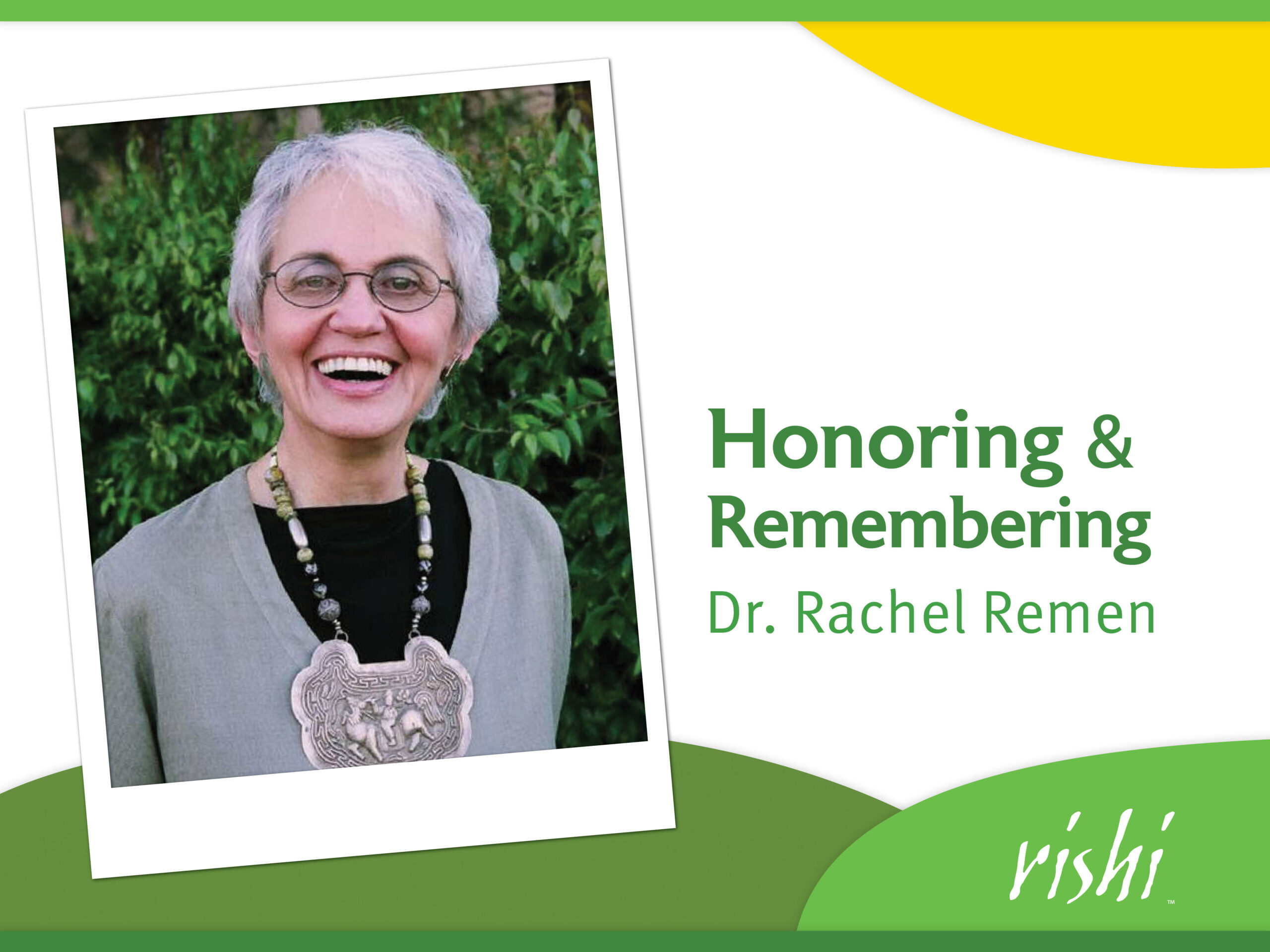
It is with a sad and heavy heart that we announce the death of Rachel Naomi…
Inside the Power of Nursing, the Groundbreaking Course Preparing Nurses for the Bedside
By Elizabeth Ken April 23, 2026 2:05 pm
Close your eyes, the professor tells the student nurses. Return to a moment in your life when you felt powerful. Maybe it’s a time you had the courage to speak up or accomplished something difficult. What did that moment feel like? What were the smells around you? The colors? The sounds? Hold onto that. Because there will come a time not long from now, when a patient will be in crisis, physicians may be yelling around you, and you’ll need a place of power and calm to return to.
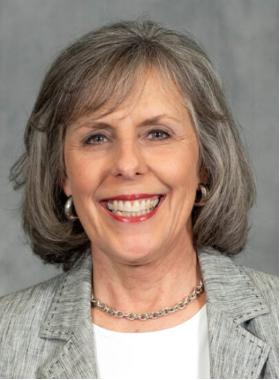
Associate Clinical Professor at the College of Nursing at Texas Woman’s University Houston Campus
This is an exercise called an “affect bridge” and it’s part of the Power of Nursing (PON), an elective course in Texas Woman’s University Bachelor of Science in Nursing (BSN) program designed to prepare nurses for the emotional and psychological challenges of nursing. PON was created by the Remen Institute for the Study of Health & Illness (RISHI) in direct response to a crisis that is quietly reshaping healthcare. Roughly one in three new nurses leaves their first job within a year.
“It’s quite scary,” says Associate Clinical Professor Suzanne Scheller who teaches the PON course at the College of Nursing at Texas Woman’s University Houston Campus. “Behind that statistic are real human costs — compassion fatigue, emotional exhaustion, and a profession that is losing talented, caring people before they ever fully arrive.”
In Scheller’s estimation, many nurses simply lose touch with their “why” — the deep sense of calling that drew them to this work in the first place. For Scheller, her why began when she volunteered to be a candy striper in high school. “I loved being able to connect with patients,” says Scheller, “the simple act of being present and making someone feel cared for. That’s where I first understood that being with someone is just as important as doing something for them.” When she became a nurse, she found she had a passion for helping the next generation of nurses. She’s seen firsthand how this crisis has gutted her profession. The PON curriculum addresses this crisis at its root.
The Unique Course Reshaping Nursing
The Power of Nursing is an experiential, immersive program that creates intentional space for reflection, renewal, and reconnection for both nursing students and practicing nurses. The benefits of PON are tangible for both hospitals and patients. Scheller notes that health systems that invest in purpose-driven nurse development report stronger retention, higher engagement scores, and reduced turnover costs — which can exceed $50,000 per nurse. For patients, an emotionally grounded and resilient nurse delivers measurably safer, more compassionate care.
“For patients, this matters profoundly,” Scheller says. “Research consistently shows that emotionally healthy nurses make fewer errors, communicate more effectively, and forge the kind of therapeutic relationships that accelerate healing.”
Inside the Power of Nursing
The five-week course is built on what’s called the Discovery Model: no lectures, no experts, no right answers. Students work in small groups. The ground rules: Listen generously. Allow for silence. What’s said in the circle stays in the circle. Don’t advise — a rule Scheller tells her students applies to her most of all.
“I’m faculty. I’m used to advising,” she tells her students. “You can say to me, ‘Suzanne, stop’ — because you’re advising.”
The first week focuses on authenticity. Scheller asks a question nursing students rarely hear: what do you leave at the door when you put on scrubs, and why? A common answer is humor. Nursing is serious work, the students reason. But Scheller challenges that assumption.
“Why can’t you bring the humor?” she asks. “What would that look like at the bedside, and how do you think the patients would relate if you shared some of that humor? Maybe that could soften things, maybe that can bring a connection.”
It’s these reconsiderations of deeply held assumptions that really matter at the bedside. Take grief and loss, the second week of PON. Most of us rarely think about what we would say to someone experiencing extreme loss, but nurses need to have considered what is helpful and what isn’t. Scheller asks the students to make a list divided into “helpful” and “not helpful.” Sometimes phrases like “I’m sorry” end up on both sides, revealing the complexity and singularity of grief. Often, this leads students to grapple with their own personal experiences of loss.
Scheller knows the cost firsthand. She still remembers the first patient she lost, early in her career on a pediatric hematology-oncology floor in Philadelphia. The patient was a child.
“I needed to do something,” she recalls, “but I was very frustrated because I couldn’t do anything.” She had been trained in every skill except the one the moment required. What got her through, eventually, was finding other young nurses in her hospital who actually understood what her days were like.
The Commitment of Nurses
Session three is the exercise from the opening — power and courage, and how to find ground under your feet when difficult scenarios unfold. The affect bridge is a tool for that: a sensory memory, stored in advance, that a nurse can return to when a moment turns hostile. Session four, healing qualities and lineage, asks students to bring in a picture — not a word, a picture — representing what they offer as nurses. Scheller recalls a particularly insightful entry. One student arrived with an image of a single drop of water. Adaptability, the student explained. Water is adaptable. This is what I bring.
In the final week, Scheller asks students to write a commitment statement. She reads aloud one particularly affecting statement. “May I give to my patients exactly what they need. Grant me the vision to see that which I cannot yet see. Give me the courage to be my best self.”
What Scheller had to find on her own during her first nursing stint, a community of nurses who are going through the same transition, is exactly what she’s trying to recreate with the Power of Nursing before these nurses ever clock in to their first rotation. Through PON’s exercises, young nurses learn each other’s stories. They learn to sit with silence. They learn that somebody else’s humor, or grief, or courage, might just be the thing that gets them through a bad day.
One student, in an evaluation of PON, put it this way: reflecting on soul, heart, and purpose was the one thing she never expected to be taught. “The space allows us to just be us,” the student wrote. “I find that so beautiful.”
For many of Scheller’s students, the course is the first time they were asked to be this vulnerable. Paradoxically, it’s precisely in this vulnerability where nurses find their greatest strengths, their courage, their power. The lessons they learn in PON stay with them long after the course ends. “This,” Scheller says, “is what really gives me hope.”
Related Posts